Introduction
For Irish SMEs, choosing between a custom website and a template website is one of the most important digital decisions you will make. This choice affects how your business is perceived, how well you rank on Google, how many enquiries you receive, and how easily your website can grow with your business.
In 2026, the gap between custom and template websites has become clearer. Customers expect fast, easy-to-use websites. Search engines reward quality, performance, and relevance. At the same time, many Irish business owners are more cost-aware than ever and want to invest wisely.
This guide explains, in plain language, the real differences between custom and template websites, the pros and cons of each, and which option works best for Irish SMEs at different stages of growth.
What Is a Template Website?
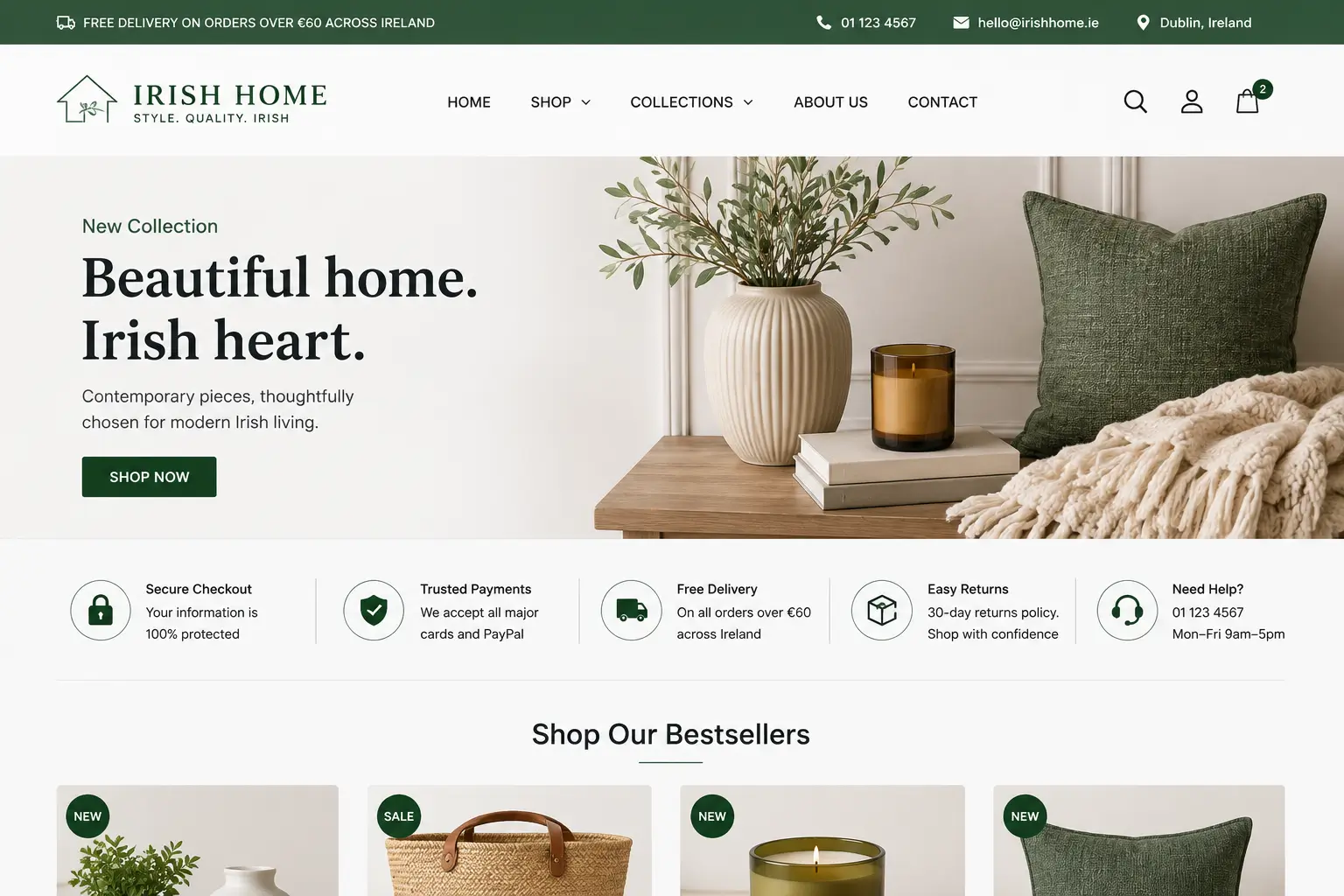
A template website is built using a pre-designed layout that has already been created for general use. These templates are commonly found on platforms like WordPress, Shopify, and other website builders.
The same template may be used by hundreds or even thousands of businesses, with only colours, images, and text changed.
Key Characteristics of Template Websites
- Pre-built layouts and page structures
- Limited design flexibility
- Lower upfront cost
- Faster launch times
- Shared design patterns across many sites
Template websites are often chosen by startups, sole traders, and businesses that need to get online quickly with a limited budget.
What Is a Custom Website?
A custom website is designed and built specifically for your business. Every element is planned around your brand, your customers, and your business goals.
Rather than adapting your business to fit a template, a custom website is built to fit how your business actually works.
Key Characteristics of Custom Websites
- Unique design tailored to your brand
- Flexible layout and functionality
- SEO and performance built in from the start
- Designed around user journeys and conversions
- Scalable for future growth
Custom websites are commonly used by established SMEs, service businesses, e-commerce brands, and companies focused on long-term growth.
Cost Comparison - Custom vs Template Websites
Cost is often the first consideration for Irish SMEs. While templates are cheaper upfront, the long-term costs can tell a different story.
How Much Does Web Design Cost in 2026
| Website Type | Typical Cost Range (EUR) | Best For |
|---|---|---|
| Basic brochure website (5 pages) | €800 - €1,500 | Start-ups, sole traders |
| Small business website (8-12 pages) | €1,500 - €3,000 | Local service businesses |
| Professional custom website | €3,000 - €6,000 | Growing SMEs |
| E-commerce website (standard) | €2,500 - €6,000 | Online retailers |
| Advanced e-commerce or custom web app | €6,000 - €15,000+ | Scaling or complex businesses |
While templates cost less at the start, custom websites usually deliver better returns over time through higher conversions and stronger search visibility.
Design and Brand Impact
For Irish SMEs, trust is critical. Your website is often the first interaction a customer has with your business.
Template Website Design
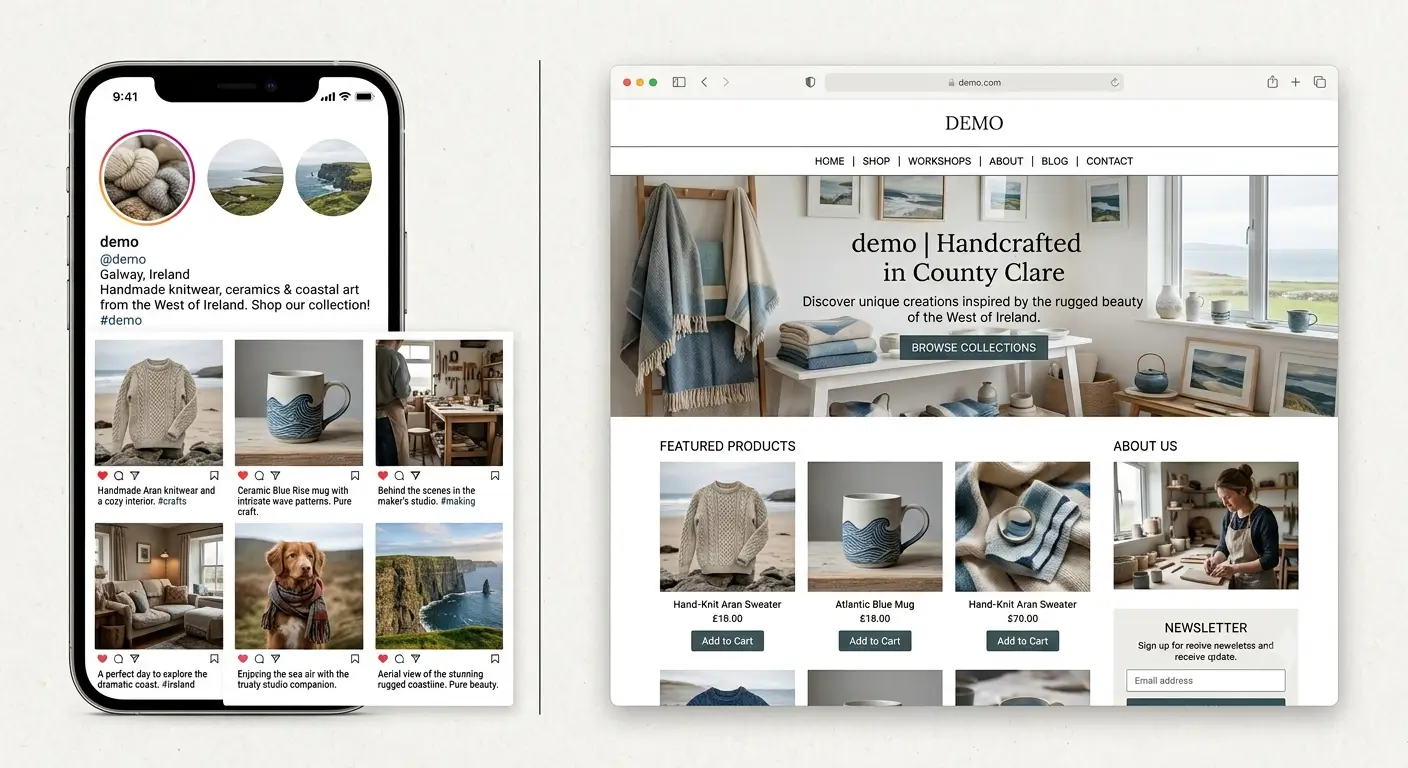
Template websites can look clean and modern, but they often look familiar. Customers may have seen the same layout used by competitors or businesses in completely different industries.
This can make it harder to stand out, especially in competitive local markets.
Custom Website Design
Custom design allows your brand personality to come through clearly. Layouts, colours, messaging, and structure are all aligned with how you want to be perceived.
This is particularly important for professional services, trades, consultants, and businesses where trust and credibility drive decisions.
SEO Performance for Irish SMEs
Search engine optimisation is one of the biggest differences between custom and template websites.
SEO Limitations of Template Websites
- Bloated code that slows down page speed
- Generic page structures
- Limited control over technical SEO
- Difficulty targeting specific services properly
Many templates are designed to suit everyone, which means they are not optimised for anyone in particular.
SEO Advantages of Custom Websites
- Clean, lightweight code
- Clear page hierarchy and structure
- Optimised loading speed
- Built around real search intent
- Better support for long-term content growth
At Web Wizard, SEO is built into custom websites from the planning stage, not added as an afterthought.
Performance, Speed, and User Experience
Website speed directly affects bounce rates, enquiries, and Google rankings.
Template Website Performance
Templates often include features you do not need. This adds unnecessary scripts and slows down your website, especially on mobile connections.
Custom Website Performance
Custom websites only include what your business actually needs. This results in faster loading times, smoother navigation, and a better experience for users.
For Irish SMEs targeting local customers, fast-loading mobile pages are especially important.
Flexibility and Future Growth
Many businesses outgrow template websites faster than expected.
Template Website Limitations
- Difficulty adding new features
- Design constraints when expanding services
- Dependency on third-party plugins
- Higher risk of conflicts after updates
Custom Website Flexibility
- Built to scale with your business
- Easier to add new services or sections
- Better integration with systems and tools
- Longer lifespan before needing a rebuild
Fictional Case Example - Irish SME Website Upgrade
Fictional Case Example: A growing Irish service business launched with a template website to save money. Within a year, they struggled to rank locally and found the site difficult to update as services expanded.
They later invested in a custom website focused on their key services, with clear calls to action and improved page speed. Within months, organic enquiries increased, and the website became their main lead source.
The initial savings of a template website were outweighed by lost opportunities.
When a Template Website Makes Sense
Template websites are not always the wrong choice. They can work well when:
- You are launching a new business with a very tight budget
- You need an online presence quickly
- The website is temporary or short-term
- Your business model is unlikely to change soon
In these cases, a well-set-up template website can still be effective if built properly.
When a Custom Website Is the Better Choice
A custom website is usually the better option if:
- Your website is a key source of leads or sales
- You operate in a competitive market
- You want to rank strongly on Google
- You plan to grow or add services
- Your brand and reputation matter
For most established Irish SMEs, a custom website is a strategic investment rather than a cost.
Common Mistakes Irish SMEs Make
- Choosing a template purely on price
- Ignoring SEO until after launch
- Overloading templates with plugins
- Rebuilding too frequently instead of planning ahead
- Not owning full access to the website
How to Decide What Works Best for Your Business
Ask yourself these questions:
- Is my website expected to generate leads or sales?
- Do I need flexibility in the future?
- Am I competing with well-established businesses online?
- Do I want to invest once or rebuild repeatedly?
Your answers will usually point clearly towards either a template or a custom solution.
Final Thoughts and Next Steps
For Irish SMEs in 2026, the choice between custom and template websites comes down to goals, not just budget.
Template websites can work for early-stage businesses. Custom websites work best for growth-focused SMEs that want better visibility, higher conversions, and long-term value.
If you want guidance tailored to your business, the team at Web Wizard helps Irish SMEs choose and build websites that actually support growth. You can also explore practical advice and comparisons on the Web Wizard blog.