Introduction
Google AI Overviews are the AI-generated summaries that now appear above the traditional blue links for many searches, pulling an answer together from several web pages instead of making the searcher click through to find it themselves. For Irish businesses, the practical effect has been a real drop in organic clicks on informational searches, not a rumour or a scare story. Ahrefs' most recent analysis of 300,000 keywords found that pages ranking first in Google now see 58% fewer clicks on average when an AI Overview appears above them, up from 34.5% just eight months earlier. That is the headline. What matters more for your business is what it actually means, which searches it affects, and what is genuinely worth changing about your website and content plan in response.
We build and manage websites for trades businesses, clinics, accountants, and ecommerce stores across Ireland, and this is the question we get asked most often on client calls right now: is our traffic falling because of AI Overviews, and if so, what do we do about it? This guide goes through what AI Overviews actually are, what the real data says about their impact, what Google's own published guidance recommends, and a practical, non-panicked plan for an Irish small business heading into 2027.
What Google AI Overviews Actually Are
An AI Overview is a summary box that Google generates using its Gemini models, placed above the standard organic results for certain searches. Instead of showing ten blue links and letting the searcher click through to find their answer, Google writes a short answer itself, drawing on multiple web pages at once, and shows a handful of source links either inline or in an expandable panel beside the summary. Google began rolling AI Overviews out more broadly across markets including Ireland during 2025, and by 2026 they appear on a meaningful share of informational searches, though not on every query and not consistently for the same query over time.
The mechanism behind this is what Google calls "query fan-out": rather than answering from a single search, the system issues multiple related searches across subtopics and data sources to build the response, then assembles the answer from what it finds. This is worth understanding because it explains why AI Overviews tend to appear most often on broad, exploratory questions ("how much does a website cost", "what is the best CMS for a small business") rather than narrow, transactional ones ("book a dentist appointment Dublin 6"), and why Google describes the feature as giving searchers "a jumping off point to explore links to learn more" rather than a replacement for visiting a website. It is worth being precise about the terminology too, because it gets muddled constantly in Irish marketing content: AI Overviews are a feature inside standard Google Search results. AI Mode is a separate, fully conversational search experience. Google's Gemini and tools like ChatGPT and Perplexity are separate AI products entirely, even though the same "will AI kill my traffic" anxiety gets applied to all of them interchangeably.
Where AI Overviews Sit on the Results Page
On both desktop and mobile, an AI Overview typically occupies the space directly beneath the search box, above the first organic result and above any local map pack. On mobile in particular, where the results page is a single scrolling column, this pushes the traditional first organic listing, the one every Irish business has spent years trying to earn, down below the fold. That positioning is the physical reason the click-through data looks the way it does: the searcher's answer, or something close to it, is now sitting above everything else on the page.
The Real Data on Organic Traffic and Click-Through Rates
The clearest, most methodologically transparent data on this comes from Ahrefs, which analysed Google Search Console data across 300,000 keywords, comparing 150,000 informational keywords that trigger an AI Overview against 150,000 similar informational keywords that do not. The finding: average click-through rate for the position one result fell 34.5% when an AI Overview was present as of an earlier check in 2025, and that figure had worsened to a 58% drop by the most recent update in 2026. Position two and three results lost roughly half their expected clicks too, and even results as far down as position ten still saw click-through rates fall by close to a fifth compared to similar searches without an AI Overview present.
Two things about that data matter for an Irish business owner reading it. First, the effect is concentrated almost entirely on informational queries, the "what is", "how do I", "why does" type searches where a short written answer genuinely satisfies most of what the searcher wanted. Commercial and transactional searches, the "book a", "buy", "near me" queries that actually put money in a business's account, are far less affected, because Google still knows the searcher needs to end up on a real business's website, form, or phone number to complete the action. Second, being cited inside the AI Overview is not the same as being excluded from it. Ahrefs' data shows that when a domain is cited as a source within the AI Overview itself, its organic click-through rate sits at roughly 0.70%, against 0.52% for a similarly ranked page not cited, and 1.45% for an equivalent ranking with no AI Overview present at all. Citation inside the box recovers a meaningful share of the traffic the box otherwise removes. It does not recover all of it, and pretending otherwise would be dishonest, but it is the difference between losing most of a search's traffic and losing effectively all of it.
Independent research points the same direction. Pew Research Center's study of real user behaviour found that the share of search visits resulting in a click to an external website dropped from around 15% to roughly 8% when an AI Overview was shown, which is consistent with, if slightly less dramatic than, the Ahrefs Search Console figures. Different methodologies, similar conclusion: a genuine, measurable reduction in clicks on informational queries, not a marketing panic invented by SEO agencies trying to sell a new service line.
| Search Type | Typical AI Overview Presence | Click Impact |
|---|---|---|
| Broad informational ("what is off-page SEO") | Very common | High: up to 58% fewer clicks to position one |
| Local/transactional ("plumber near me") | Rare | Minimal, map pack and organic still dominate |
| Branded ("[business name] reviews") | Uncommon | Low, searcher already knows the destination |
| Comparison/research ("best CRM for small business") | Common | Moderate to high, cited sources retain some traffic |
What Google's Own Guidance Actually Says
Here is where a lot of Irish agency content on this topic goes wrong, because it invents new acronyms and imaginary ranking factors instead of reading what Google has actually published. Google's own AI Features and Your Website documentation states plainly that "there are no additional requirements to appear in AI Overviews or AI Mode, nor other special optimisations necessary." To be eligible, a page simply needs to be indexed and eligible to appear in normal Google Search with a snippet, meeting the same technical requirements that have always applied. There is no special schema markup, no "AI text file", and no secret submission process. If a page ranks well and is genuinely useful, it is already a candidate for citation.
Google's companion guide to optimising for generative AI features, published as part of its Search Central documentation, is explicit that so-called "AEO" and "GEO" are, in Google's own framing, still SEO. The guidance runs on three consistent themes: foundational SEO fundamentals, demonstrable expertise, and trust plus local relevance. It recommends creating content based on genuine first-hand knowledge of a topic rather than generic summarisation, keeping pages crawlable and technically sound, and using semantic HTML so both readers and machines can follow the structure of a page. It also explicitly debunks several myths circulating in exactly the kind of content this post is trying to outrank: you do not need to "chunk" your content into artificial fragments for AI systems, you do not need to rewrite existing pages specifically to be machine-readable, and structured data, while still useful for other reasons, is not a requirement for AI Overview eligibility.
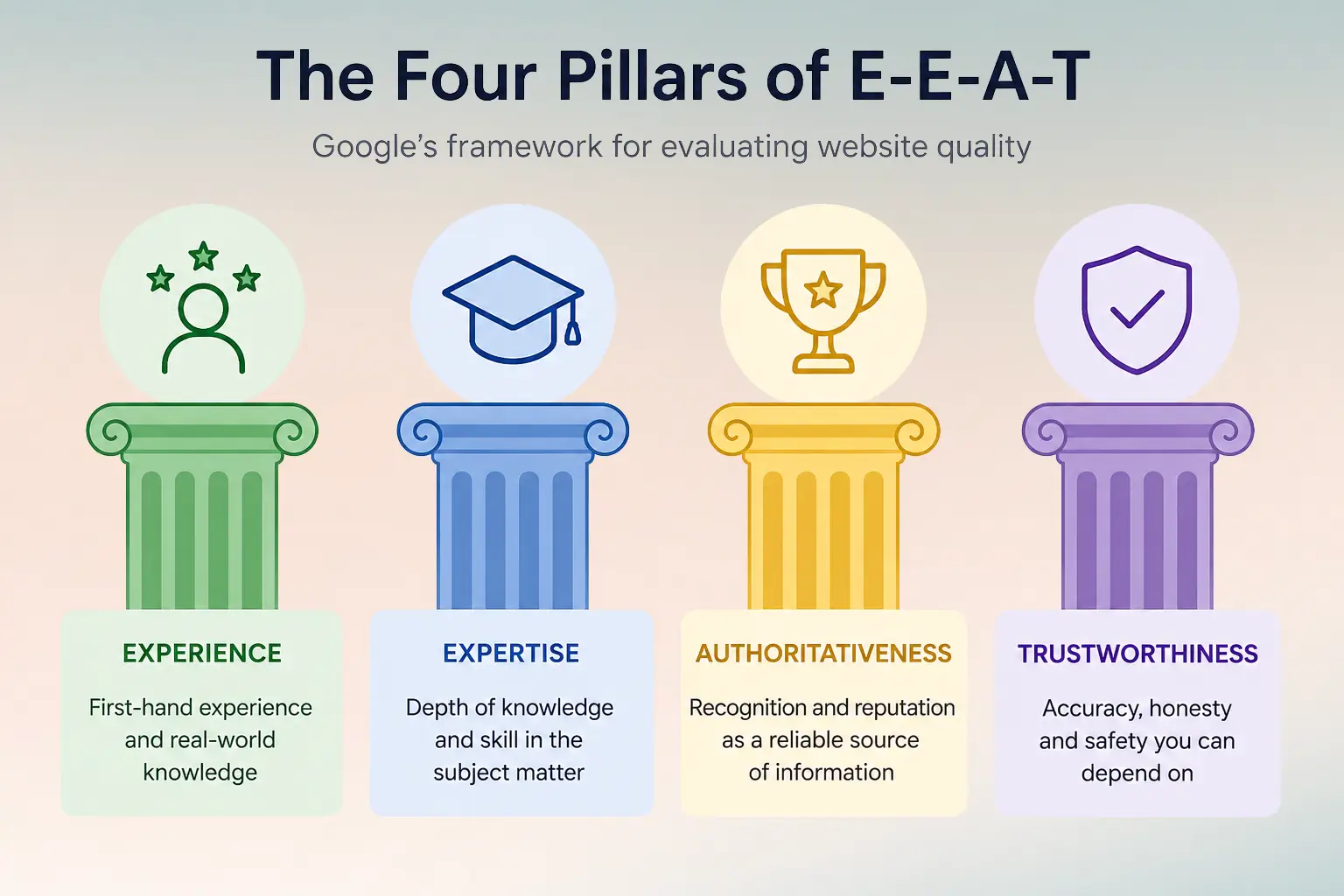
What this means practically is that AI Overviews draw from the same Search index and the same core ranking systems, including the quality signals covered in our guide to what E-E-A-T is and why Google uses it to rank your website, as traditional organic results always have. There is no parallel ranking system to game. A page that would not rank on page one of classic Google Search has no realistic path into an AI Overview citation either, whatever a "GEO audit" service tries to sell you.
Worried AI Overviews Are Quietly Eating Your Traffic?
Custom Web Design Starting at €1,500 | No Hidden Fees | Free Consultation | Custom, SEO-ready site in 4 weeks (not 12-16)
Practical Ways to Improve Your Odds of Being Cited
Given that there is no secret AI Overview ranking factor, the honest advice is that the things which help your page get cited in an AI Overview are the same things that help it rank well and earn a featured snippet in classic Search. The main differences are emphasis, not method.
Answer the Question Directly, Near the Top
Google's query fan-out approach favours pages that state a clear, self-contained answer early, then expand on it. A page that buries its actual answer three paragraphs of scene-setting into the article is harder for both a human skim-reader and an AI summarisation system to lift cleanly. Open each major section with a direct answer of a sentence or two, written so it makes sense on its own, and then explain the detail underneath it. This is exactly the structure that also wins featured snippets, so it is not extra work, it is the same work done properly.
Use Genuine Headings That Map to Real Questions
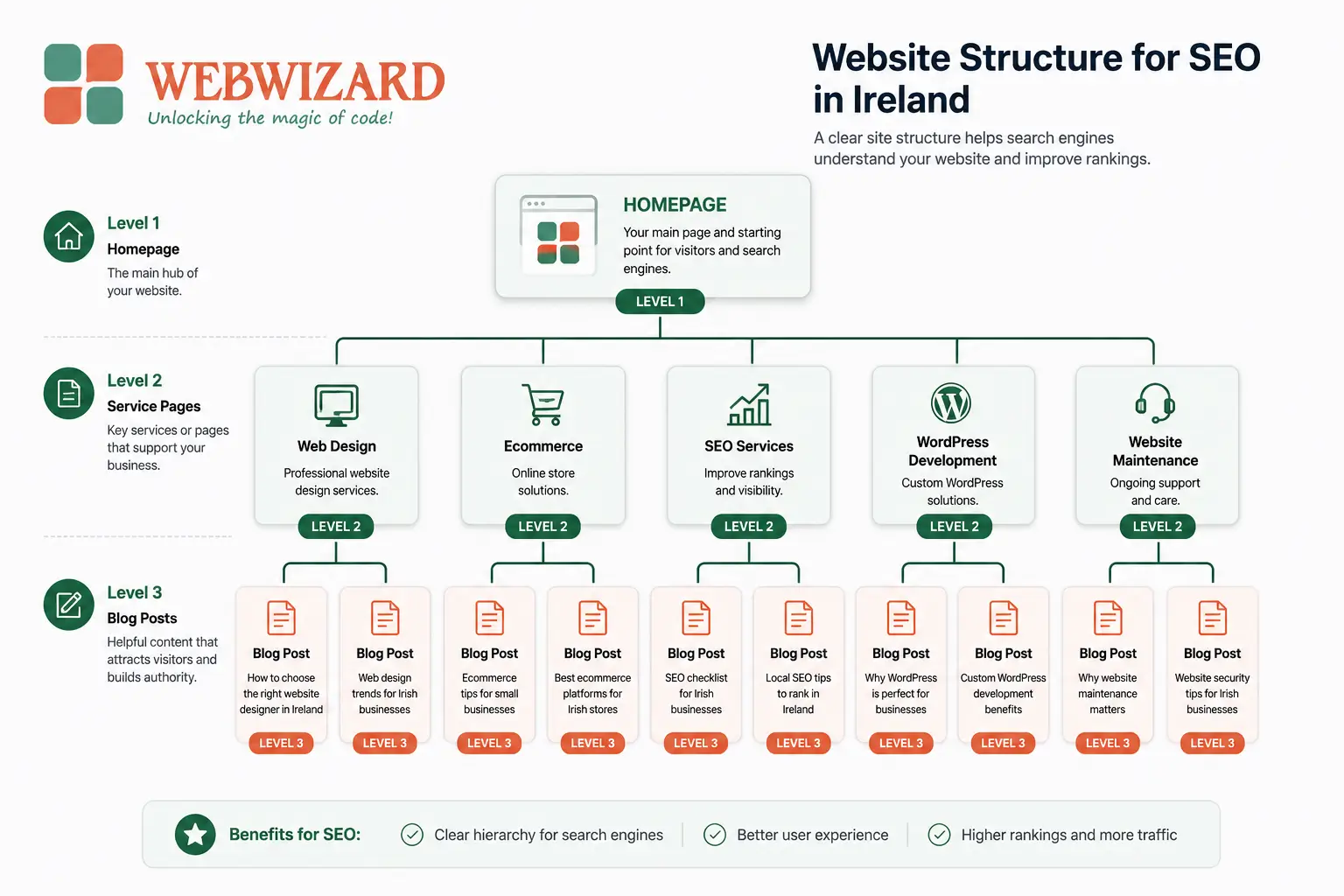
Clear H2 and H3 structure that mirrors how people actually phrase a question, "how much does X cost in Ireland" rather than a vague "Pricing" heading, makes a page easier to fan-out into and cite from. This is also good practice for a well-planned site structure for SEO in Ireland, which was already worth doing before AI Overviews existed.
Keep Structured Data and Technical SEO Healthy, Not for AIO but for Everything Else
Google is explicit that schema markup is not required for AI Overview eligibility, so do not let anyone sell you a "structured data for AI" package as if it unlocks a hidden gate. That said, clean schema, fast page load, and mobile usability remain worth doing because they help classic ranking, which is the actual prerequisite for AI citation. If your site is slow or poorly structured, fixing that does more for your AI Overview chances than any markup ever will. Our practical checklist on how to speed up a WordPress website covers the technical side of this in detail.
Show Real Experience, Not Just Correct Information
A generic, technically accurate paragraph about a topic is easy for an AI system to summarise from any of a dozen competing pages, which means it is easy to be one of several sources rather than the preferred one. A specific price you actually charge, a real client scenario, a photo from your own premises, or an opinion you genuinely hold gives an AI system, and a human reader, something distinctive to pull from. We cover this in more depth in our guide to AI content and SEO for Irish businesses, and it applies just as directly to being cited in an AI Overview as it does to avoiding a scaled content penalty.
Build Real Authority Off-Page
Citation-worthy content still needs a reputation behind it. Genuine backlinks, mentions in trade press, and consistent business information across your website and Google Business Profile all feed into the trust signals Google's own guidance names directly. Our piece on whether off-page SEO is still effective for Irish businesses in 2026 goes through which off-page tactics still move the needle now that AI-generated answers sit above the fold.
- Audit your top ten organic landing pages in Search Console and note which are informational versus transactional
- Add a direct, self-contained answer paragraph near the top of each informational page
- Check Search Console's Generative AI performance report (rolled out through 2025-2026) to see actual AI Overview impressions and clicks for your site
- Fix technical basics, page speed, mobile usability, indexability, before touching anything AI-specific
- Strengthen local SEO and Google Business Profile for transactional searches, since these are barely touched by AI Overviews
Fictional Case Example: A Kilkenny Accountancy Practice Reworks Its Blog
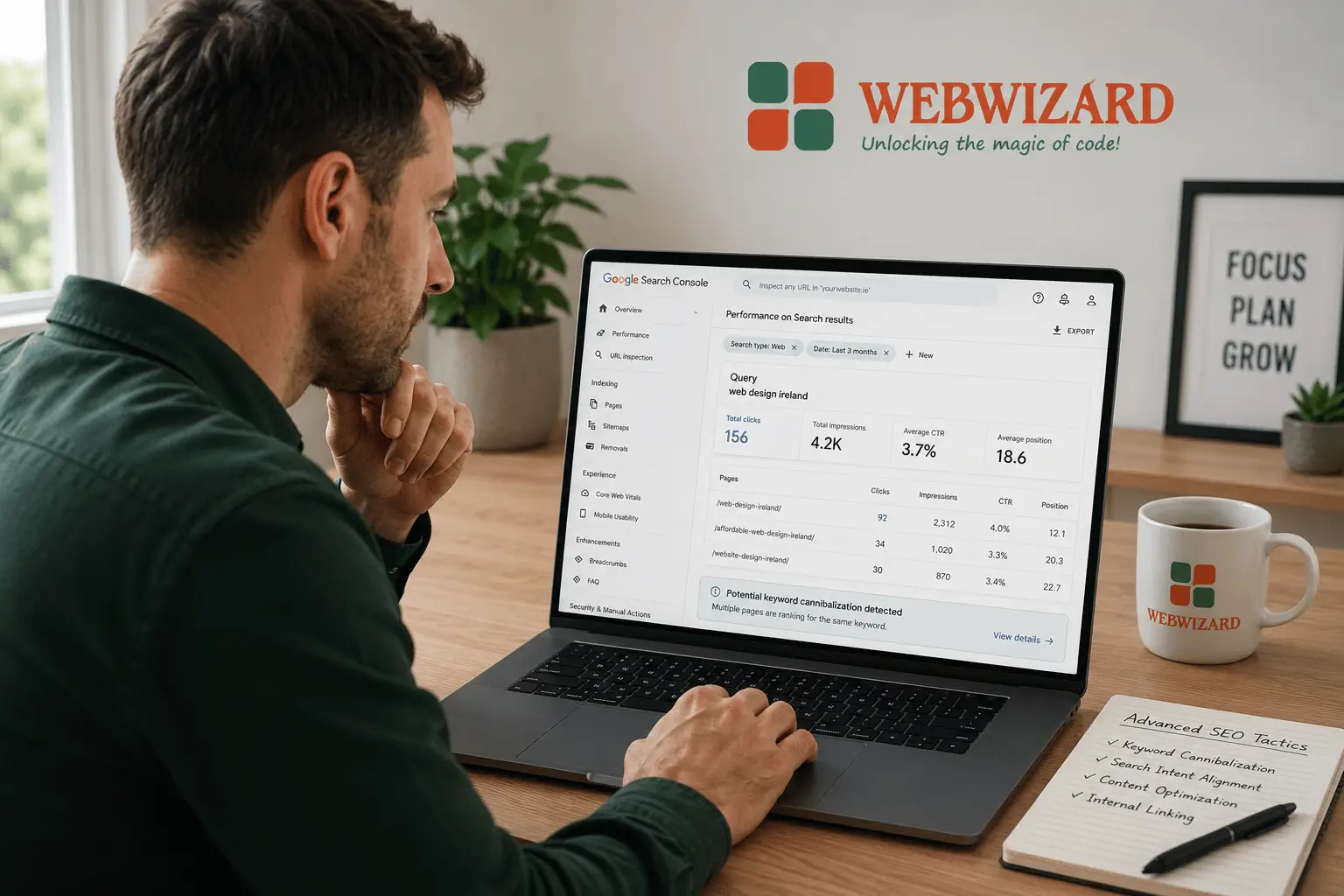
Fictional Case Example: Maher & Associates, a fictional three-person accountancy practice in Kilkenny, noticed their blog traffic on general tax-guide articles had fallen by roughly a third over eighteen months, despite the pages still ranking on page one. A look at Search Console showed most of the affected pages were broad informational searches like "when is the self-assessment deadline in Ireland", exactly the kind of query where an AI Overview now answers the basic question directly. Rather than abandoning the content, they restructured each guide to open with a tight, direct answer to the core question, then added their own commentary on the mistakes they see clients make every filing season, something no generic AI summary could replicate. They also tightened their Google Business Profile and started linking their guides to their actual booking page for tax return consultations rather than leaving pages as dead-end reading. Informational traffic on the affected pages did not fully recover, but consultation bookings sourced from those same pages rose, because the readers who did click through were now landing on pages that pushed them towards a next step instead of just information.
Common Mistakes Irish Businesses Make With AI Overviews
Panicking and Abandoning Content Marketing Entirely
Some businesses see one traffic dip on Search Console and conclude blogging is dead. It isn't. The drop is concentrated on broad informational queries, and even those still send some traffic, especially when your page is the one cited. Stopping content production altogether just hands that remaining traffic to competitors who kept publishing.
Paying for a "GEO Audit" That Adds No Real Value
A wave of agencies now sell generative engine optimisation audits promising secret techniques to "unlock" AI citations. Google's own documentation states there are no special requirements or markup needed. If a service is selling you AI-specific technical fixes beyond sound SEO fundamentals, ask exactly what ranking mechanism they claim to be influencing, because Google has already said there isn't one.
Chasing AI Overviews Instead of Revenue-Driving Searches
Spending your limited content budget optimising broad informational pages for AI citation, while neglecting the transactional and local searches that actually convert, is backwards. AI Overviews barely touch "electrician near me" or "book a consultation" style searches. That is still where most small business revenue-relevant traffic lives.
Ignoring the Search Console Generative AI Report
Google has rolled out reporting inside Search Console specifically covering AI Overview and AI Mode impressions and clicks. Many businesses have never opened it, which means they are guessing at AI Overview impact instead of measuring it directly against their own actual pages.
Writing Vaguer Content to "Please the AI"
Some businesses strip out specific detail, pricing, and opinion from their content, assuming generic phrasing is safer for AI summarisation. This is backwards. Generic content is exactly what gets summarised and replaced. Specific, experience-based detail is what gets a source cited by name rather than paraphrased into oblivion.
Need an Honest Read on How AI Overviews Are Affecting Your Site?
Custom Web Design Starting at €1,500 | No Hidden Fees | Free Consultation | Custom, SEO-ready site in 4 weeks (not 12-16)
Where AI Overviews Fit Into Your Wider SEO Strategy
AI Overviews are not a separate discipline that sits alongside SEO. They are a visible symptom of the same ranking systems doing the same job they always did, surfaced through a different presentation layer. Comparing on-page SEO and off-page SEO still matters exactly as much as it did before, because both feed the same index AI Overviews draw from. A page riddled with the keyword cannibalisation and thin content problems we cover in advanced SEO tactics for Irish businesses was never going to be cited in an AI Overview, because it was never going to rank well enough to be a candidate in the first place.
None of this works on a technically weak foundation. A site running on outdated plugins, as covered in what happens when you don't update your WordPress plugins, or one that has not been touched in years and needs a genuine website redesign, is fighting an uphill battle regardless of how well its content is written. Consistent, planned content still matters too. Our guide on how often you should update your website content sets a realistic publishing cadence that applies just as much now as it did before AI Overviews existed.
If you are building a new site from scratch, this is genuinely a good moment to get the structure right from day one rather than retrofitting it later. A properly built business website on a platform like WordPress, with clean information architecture and genuine SEO built in from the ground up, is in a far stronger position to earn both traditional rankings and AI citations than a patched-together site chasing the latest acronym. Sector-specific pages, whether that is a page for accountants or one for dental clinics, benefit the same way: specificity beats generic breadth in both classic Search and AI summarisation.
Ongoing website maintenance keeps the technical foundation this all depends on intact month to month, rather than letting small issues compound into the kind of site health problems that quietly cap how well any content, however well written, can perform. And if content strategy and structure feel like too much to manage alongside running the actual business, our social media marketing and content services exist precisely to take that off your plate.
The honest summary is this: AI Overviews have genuinely reduced clicks on broad informational searches, the data is clear on that, and pretending otherwise would not serve you. But they have not replaced the ranking systems your business already needs to be good at, they have not created a shortcut around genuine expertise and technical soundness, and they barely touch the transactional and local searches that actually bring in paying customers. Keep doing SEO properly. Do not pay for a service that claims to have found a separate lever.
If you want a clear-eyed look at how AI Overviews are actually affecting your specific site, rather than a generic panic response, get in touch with Web Wizard for a no-obligation review. We will check your Search Console data, tell you honestly what has changed, and what is actually worth doing about it.